

Why Putative Father Status Matters in Paternity Cases
If you are a Staten Island paternity law attorney’s prospective client and you are uncertain about your legal standing as an unmarried father, you are not alone. Many men discover that being the biological father of a child born outside of marriage does not automatically give them any say in that child’s life. Without legal recognition, you have no enforceable right to custody, visitation, or even notification if an adoption is being planned. The consequences of inaction are real: you could lose the chance to build a relationship with your child entirely. This article breaks down what a putative father is, how to establish paternity in Family Court, how it affects child support and the birth certificate, and when to contact a paternity lawyer in Staten Island.
Key Takeaways
- A putative father is an unmarried man who claims or is alleged to be the biological father of a child but has no legal parental rights until paternity is formally established under New York law.
- A putative father in Staten Island has limited rights and cannot seek enforceable custody, visitation, or decision-making authority until paternity is legally confirmed through an acknowledgment or court order.
- The main ways to establish paternity include signing a voluntary acknowledgment of paternity, filing a paternity petition in Family Court, or obtaining a court order after a DNA test.
- Once paternity is established, it triggers both rights and responsibilities, including eligibility for child custody and visitation as well as child support obligations under the Child Support Standards Act.
- Delays in taking legal action can weaken a father’s position in future custody disputes, adoption proceedings, or termination of parental rights cases, making timely consultation with a paternity law attorney critical.
Defining a Putative Father Under New York Paternity Law

A putative father claims to be a child’s father but has not yet had that claim confirmed through any legal process. Under New York law, a biological father does not automatically become a legal father simply because of genetics. Until paternity is adjudicated or acknowledged, the man generally has no enforceable parental rights or responsibilities.
This status typically arises when:
- The parents are not married at the time of the child’s birth.
- The father’s name does not appear on the birth certificate.
- No acknowledgment of paternity or court order has been signed or issued.
In plain terms, a putative father is someone in legal limbo. He may genuinely be the natural father of the child, but until the law recognizes him, he cannot exercise rights like custody, visitation, or participation in major decisions about the child’s welfare. A biological father is the genetic father of a child, yet that genetic connection alone does not create a legal relationship in New York.
Putative Father vs. Presumptive and Legal Father in New York
Understanding where you stand requires knowing the differences between several categories of fatherhood under New York law. These distinctions matter because they determine who holds parental rights and who must take additional steps to secure them.
A presumptive father is usually married to the child’s mother at the time of birth or conception. Under the marital presumption, the husband is automatically considered the legal father, even if another man is the biological parent. Overcoming this presumption requires affirmative legal action, such as filing in court and potentially presenting genetic testing results.
An acknowledged father has established a legal father-child relationship by signing a voluntary acknowledgment of paternity with the child’s mother. This process bypasses the need for a court hearing when both parents agree.
An adjudicated father is named by a court order as the father, typically after paternity proceedings that may include DNA evidence and testimony. This results in an Order of Filiation.
A putative father, by contrast, only claims or is alleged to be the father and must take legal steps before having full rights or obligations. He occupies a different position than any of the categories above because he lacks formal legal recognition.
When claims conflict, for example, when a husband and a putative father both assert parentage, Family Court resolves the dispute through evidence, testimony, and potentially a DNA test. The court weighs biological facts alongside the child’s existing relationships and overall best interests.
How New York Handles Putative Fathers and the Role of the Registry

New York maintains a putative father registry under Social Services Law Section 372-c. This registry allows unmarried men who believe they fathered a child to file a notice of intent to claim parentage with the state. A putative father can file a notice of intent to claim parentage with the registry, and doing so places his name on record with the appropriate agencies.
Almost all states maintain a putative father registry, and New York’s version serves a specific protective function. Registration with the putative father registry is essential for receiving notice in adoption or foster care proceedings. Without registration, a man may never learn that his child is being placed for adoption until it is too late to intervene.
Here is what the registry does and does not do:
- It preserves the right to receive notice of adoption proceedings, termination of parental rights cases, and certain other legal actions involving the child.
- It does not, by itself, establish paternity or grant any custody or visitation rights.
- Registry information is confidential and is disclosed only to courts or authorized agencies unless a court orders otherwise for good cause.
A putative father registry helps protect unmarried fathers’ rights by ensuring they are not excluded from critical proceedings without their knowledge. Putative father registries help protect fathers’ rights, but registration is only one piece of the puzzle. A family law attorney can help determine whether and when to register, especially when there is reason to believe an adoption plan may already be in motion.
Practical Rights and Limits of a Putative Father Before Paternity Is Established

A putative father is not automatically granted parental rights in New York. This is one of the most important things for unmarried fathers to understand. New York family law does not grant a putative father automatic decision-making authority over the child.
When a child is born out of wedlock and paternity has not yet been established through an acknowledgment or court order, the mother generally holds sole legal authority regarding the child. She can make all medical, educational, and relocation decisions without consulting the putative father. She may also pursue an adoption plan without the father’s formal consent if he has not taken steps to protect his position.
What does this look like in practice?
- A putative father may voluntarily provide financial support, but those contributions do not create enforceable rights or obligations.
- Informal arrangements for contact or visitation are not backed by any court order and can be withdrawn at any time.
- If the father fails to act promptly, courts may view the delay as a lack of interest, weakening his position in later custody disputes or adoption proceedings.
A putative father must take specific legal steps to establish paternity and protect parental rights. Verbal agreements, informal payments, and moral commitments carry little weight in court. The gap between being a responsible person and holding legal rights is real, and it can only be closed through formal legal action.
How to Establish Paternity in Staten Island: Main Legal Pathways

There are three primary ways to establish paternity in Staten Island:
- Signing a voluntary acknowledgment of paternity when both parents agree on the child’s parentage.
- Filing a paternity petition in Family Court when the parents disagree or one party disputes the claim.
- Addressing paternity within Supreme Court proceedings, such as during a divorce or related case where parentage is at issue.
Once paternity is established, the man becomes the legal father with the right to seek custody and visitation, as well as the responsibility to provide child support. Establishing paternity is often the first and most essential step before any custody or support order can be issued.
Each of these pathways has its own procedures, requirements, and strategic considerations. The sections that follow break them down in detail.
Voluntary Acknowledgment of Paternity: Fast Track to Legal Fatherhood

Fathers can establish paternity through a signed acknowledgment of paternity, which is a standardized form both unmarried parents complete together. An acknowledgment of paternity can be signed at the hospital shortly after the child’s birth, at a local child support office, or later through the vital statistics registrar.
When both parents sign the form:
- The father’s name can be placed on the child’s birth certificate without a court hearing.
- A legal father-child relationship is created, triggering both rights and duties.
- The father gains the ability to seek visitation or custody through Family Court.
- The father also becomes potentially subject to a child support order.
This process is the fastest route to legal fatherhood when there is no dispute. It avoids the time and expense of court proceedings. However, parents should understand the long-term consequences before signing. Once the voluntary acknowledgment is executed, it carries the weight of a court order and is difficult to undo after a short window.
Legal assistance can be important if there is any uncertainty about biological parentage, or if either parent feels pressured. Signing without full understanding can lead to complications down the line.
Changing or Challenging an Acknowledgment of Paternity in New York
New York law provides a limited window to rescind a signed acknowledgment. Under Family Court Act Section 516-a and Public Health Law Section 4135-b, a signatory who is 18 or older has 60 days from the date of signing to vacate the acknowledgment without needing to prove fraud or mistake.
After the 60-day period closes, challenging the acknowledgment becomes significantly harder. The person seeking to overturn it must demonstrate one of the following:
- Fraud in the signing process
- Duress or coercion
- Material mistake of fact, such as evidence that the signatory is not the biological father
The burden falls on the challenging party to present clear and convincing evidence. Courts also apply equitable estoppel in some cases, meaning that even if a DNA test shows the man is not the genetic father, the court may refuse to vacate the acknowledgment if doing so would harm the child’s welfare. The child’s established emotional bond with the person who has acted as a parent weighs heavily in these decisions.
Anyone who doubts paternity should seek legal advice promptly, either before signing or immediately after learning new information. A paternity law attorney can evaluate whether grounds exist to challenge the acknowledgment and navigate the procedural requirements.
Establishing Paternity Through Staten Island Family Court

When parents disagree about who the child’s father is, a paternity petition can be filed in Family Court. Either the mother, the putative father, the child’s guardian, or a social services agency may initiate the petition. Paternity can be established via court order if parents disagree on the child’s parentage.
Here is how the process typically works:
- The petitioner files a paternity petition along with required forms, including a summons and personal information sheet, with the Staten Island Family Court at no filing fee.
- The respondent must be properly served with the petition and summons.
- At the initial appearance, a support magistrate handles the case. If the respondent admits paternity, the court can enter an order. If the respondent denies it, the court orders genetic testing.
- After testing, if results support parentage, the court holds a hearing and issues an Order of Filiation.
An Order of Filiation is issued by the court to establish legal paternity. Once entered, this order formally names the man as the legal father and opens the door to custody, visitation, and child support proceedings. The same proceeding may also address temporary support or interim visitation if the circumstances require it.
Staten Island’s Family Court is part of the New York City system, and all five boroughs follow the same statutory framework. DIY forms are available through the court system for those proceeding without an attorney, though contested cases generally benefit from legal representation.
The Role of DNA Testing in Staten Island Paternity Cases
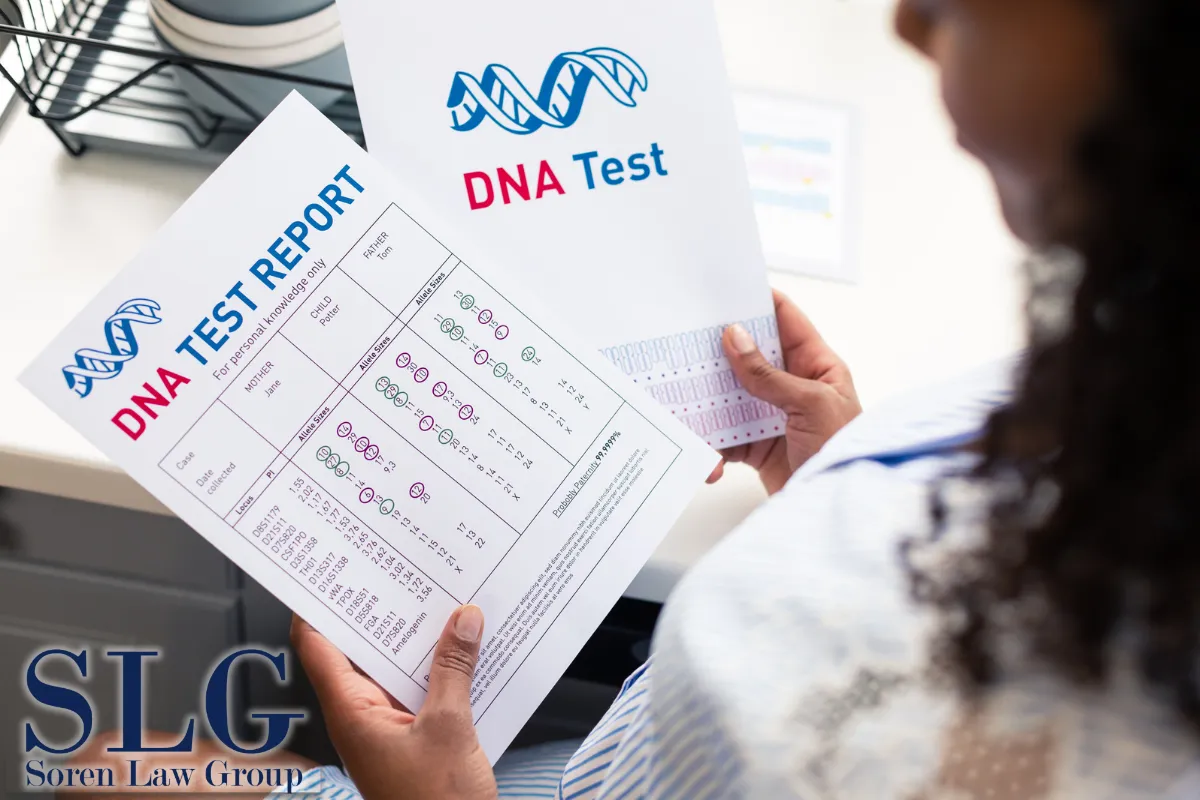
DNA tests may be ordered to establish paternity when the alleged father denies being the child’s parent or when there is genuine uncertainty. A putative father can request DNA testing to establish biological parentage, and the court can compel testing if a party refuses to participate voluntarily.
Testing in paternity cases typically involves:
- Cheek swab samples collected from the child, the mother, and the alleged father
- Analysis by an accredited laboratory
- A report indicating the probability of parentage
Under New York Family Court Act Section 532(a), genetic marker test results showing a 95 percent or higher probability of paternity create a rebuttable presumption that the man is the father unless successfully challenged. The alleged father can rebut this with other evidence, but the threshold is high.
Refusal to submit to testing carries consequences. The court may draw a negative inference, essentially assuming the results would have been unfavorable to the refusing party, and proceed to make a determination based on available evidence.
Cost and scheduling for court-ordered testing are generally coordinated through the court or the support collection unit. Private or informal tests taken outside of the court process may not carry the same evidentiary weight, so legal advice before agreeing to any test is prudent.
How Paternity Affects the Child’s Birth Certificate and Legal Identity

Once paternity is established, the father’s name can be added to or corrected on the child’s birth certificate through New York’s vital statistics procedures. Whether parentage was confirmed through an acknowledgment or an Order of Filiation, the filing must be submitted to the registrar in the district where the birth occurred.
Being listed on the birth certificate carries significant weight. Children have rights to support and benefits from established paternity, including access to social security benefits, health insurance, inheritance rights, and family medical history. A corrected child’s birth certificate documents the parental relationship and strengthens the child’s legal identity for years to come.
The process for amending vital records typically requires:
- A certified copy of the Order of Filiation or filed acknowledgment
- Completion of the appropriate amendment application
- Payment of applicable fees
Accurate vital records matter for both the birth parent and the child. Without the father’s name on the birth certificate, proving the legal relationship later can require additional court proceedings.
From Putative Father to Legal Parent: Custody and Visitation Rights

Fathers must establish paternity to gain custody rights. This is the threshold requirement in New York. Once a man is recognized as the legal father, he can petition for child custody or child visitation in Family Court in Staten Island.
Establishing legal paternity provides a putative father the right to seek custody and visitation. Legal rights of a father include custody, visitation, and participation in the child’s life after establishing paternity. Fathers have the right to visitation or parenting time with their child once legal fatherhood is confirmed.
New York applies a best interests of the child standard when making custody and visitation determinations. Factors the court considers include:
- Each parent’s caregiving history and involvement
- The stability of each parent’s home environment
- The child’s preferences, depending on age and maturity
- Each parent’s ability to meet the child’s physical, emotional, and educational needs
- Any history of domestic violence or substance abuse
Being the legal father does not guarantee physical custody or joint custody, but it ensures the father has standing to be heard. Cooperative parenting plans and mediation can sometimes resolve custody disputes more efficiently than contested hearings.
Fathers considering a custody petition should speak with a family law attorney before filing to align their strategy with their goals and the facts of their case.
Financial Responsibilities: Child Support After Paternity Is Established
Once paternity is legally established, New York courts can issue a child support order requiring the legal father to provide child support for the child. Establishing paternity grants fathers legal rights and responsibilities, and the obligation to pay child support is one of the most immediate consequences.
Fathers must support their child until age 21 or emancipation under New York law. Even if the father has limited visitation, a child support obligation typically still applies unless a court decides otherwise based on specific circumstances.
A child support order may include:
- Basic monthly support calculated under statutory guidelines
- Contributions toward health insurance premiums
- A share of unreimbursed medical expenses
- Child care costs necessary for the custodial parent to work or attend school
Legal fatherhood allows participation in custody and support decisions, meaning the father also has the right to be heard on the amount and terms of any support order. Voluntary financial support provided before a court order may demonstrate good faith but does not replace a formal child support enforcement mechanism.
How the Child Support Standards Act Impacts Staten Island Paternity Cases

The child support standards act provides the framework courts use to calculate basic child support in New York. Under Family Court Act Section 413, the court determines each parent’s income, combines them, and applies a statutory percentage based on the number of children:
| Number of Children | Percentage of Combined Parental Income |
|---|---|
| 1 | 17% |
| 2 | 25% |
| 3 | 29% |
| 4 | 31% |
| 5 or more | 35% or more |
The court then allocates each parent’s share based on their proportion of the total combined income. The noncustodial parent’s share becomes the child support obligation.
Above New York’s statutory combined parental income cap under Family Court Act Section 413, the court has discretion to apply the statutory percentages or consider the statutory factors when determining support on income above that cap. Judges can deviate from the child support standards when special circumstances exist, such as extraordinary medical needs, educational costs, or other unusual expenses.
Accurate income reporting is critical. The definition of income under the statute includes wages, self-employment earnings, retirement distributions, and certain government benefits. A paternity lawyer can help ensure that income is properly calculated and that the resulting support amount reflects the actual financial picture.
Protecting Putative Father Rights in Adoption and Termination Proceedings

A putative father’s rights can be severely impacted if an adoption proceeding or termination of parental rights case is filed involving the child. Prospective adoptive parents may seek to finalize an adoption without the biological father’s consent if he has not taken steps to protect his legal position.
Registering with the putative father registry and promptly filing to establish paternity are two of the most important actions a man can take. A registered putative father is entitled to receive notice of these proceedings, giving him the opportunity to appear and contest the action.
Courts evaluate whether the birth father has demonstrated commitment to the parental relationship through:
- Consistent financial support
- Regular contact with the child or attempts to maintain contact
- Timely legal action to establish paternity
Delay is the single biggest risk in these situations. A man who learns of a possible pregnancy or birth and waits months to act may find that an adoption has already progressed too far to reverse. The law rewards proactive steps and penalizes inaction.
Special Issues: Multiple Alleged Fathers and Complex Family Situations
Sometimes more than one man may be identified as a possible father of a child, leading to overlapping paternity petitions or contested hearings. These cases arise when the biological mother was involved with multiple partners around the time of conception, or when the marital presumption names one man while another asserts a biological claim.
Courts resolve these disputes using:
- DNA testing to determine genetic parentage
- Testimony about each man’s relationship with the child and the mother
- Application of the marital presumption where applicable
- Equitable estoppel, where a long-standing parent-child relationship may take precedence over genetic results if disruption would harm the child.
In Matter of Stephen B.J.B. v Marcia N.S.C. (2025), the court examined whether the parental relationship established over time should be protected even when new genetic evidence emerged. These cases are highly fact-specific and require strategic legal advocacy to protect both the putative father’s interests and the child’s welfare.
Complex family situations like these cannot be resolved through generic advice. The interplay of genetics, law, and the child’s emotional ties demands careful analysis by a qualified attorney.
Documenting Involvement: Building a Strong Case as a Putative Father
If you believe you are the father of a child and are preparing to seek legal recognition, documentation can make a meaningful difference in your case. Family Court judges and magistrates consider the quality and consistency of a father’s involvement when making decisions about custody, visitation, and the overall parental relationship.
Practical steps to build a strong record include:
- Saving text messages, emails, and letters exchanged with the child’s mother about the child
- Keeping receipts for financial support such as diapers, clothing, food, or medical expenses
- Documenting visits, including dates, times, and any photos or videos
- Recording any attempts to be involved that were refused or blocked
- Maintaining travel records if distance is a factor
This evidence can demonstrate commitment and responsibility, especially when the other parent disputes the father’s involvement. An organized record also helps a family law attorney present a coherent narrative to the court during hearings or negotiations.
Consistency is more persuasive than grand gestures. Courts look for sustained engagement over time rather than a single large payment or a brief burst of involvement.
When to Speak With a Staten Island Paternity Lawyer About Your Rights

Several situations should prompt immediate consultation with a paternity law attorney:
- Learning of a pregnancy or birth when you are not married to the mother
- Being denied contact with a child you believe is yours
- Receiving court papers related to a paternity petition, adoption proceeding, or termination of parental rights
- Being asked to sign an acknowledgment of paternity and feeling uncertain about the implications
- Discovering information that calls previously established parentage into question
Early consultation can prevent costly mistakes. Signing documents without understanding their consequences, missing critical filing deadlines, or failing to register with the putative father registry can all undermine your position.
An experienced attorney can evaluate the facts, explain likely outcomes, and design a plan to establish paternity and pursue appropriate orders. Rather than waiting until a crisis like an adoption notice arrives, proactive legal guidance puts you in the strongest possible position to protect your relationship with your child.
Staten Island Paternity Law Attorney – Soren Law Group

At Soren Law Group, we are based in Staten Island, New York, and we focus on guiding clients through every stage of paternity cases with clarity, strategy, and personal attention. We help unmarried fathers and mothers file or respond to paternity petitions, navigate court-ordered genetic testing, and address custody and child support issues once parentage is established. Our team reviews acknowledgments of paternity, court documents, and proposed agreements carefully so our clients understand every right and obligation before signing anything. Whether you need to establish legal fatherhood, challenge a prior acknowledgment, or protect your position in an adoption proceeding, we are here to help. Call us at (718) 815-4500 or complete our secure online contact form to schedule a confidential consultation with a paternity law attorney who understands Staten Island Family Court practice.
Frequently Asked Questions
Can a Putative Father Seek Parenting Time Before Paternity Is Fully Established?
In most cases, New York courts require legal paternity to be determined before issuing a formal custody or visitation order. Without an Order of Filiation or a signed acknowledgment of paternity, the court lacks jurisdiction to enforce parenting time arrangements. That said, parents sometimes agree informally to allow contact, but these agreements carry no legal weight and can be withdrawn at any moment. In limited situations, a judge may set temporary arrangements while genetic testing or legal proceedings are pending if doing so serves the child’s stability. If the child’s mother is blocking all contact, consulting a law attorney who handles paternity cases can help you explore interim options and file the necessary petitions promptly.
Does a Putative Father Have to Pay Child Support Before Paternity Is Confirmed?
Formal child support obligations generally begin only after a court issues an order or after an acknowledgment of paternity is signed and processed. Before that point, no court can compel a man to pay child support because legal parentage has not been confirmed. However, voluntarily providing financial support before a court order is entered can demonstrate good faith and involvement, which may be viewed favorably by a judge in later proceedings. Once paternity is established, support can be ordered prospectively and, in some situations, retroactively to the date the petition was filed. To avoid complications, seek legal guidance before making large payments without proper documentation, as informal payments may not receive credit against a future child support obligation.
What Happens if the Mother Is Married to Someone Else When the Child Is Born?
When a child is born during a marriage, the mother’s husband is usually the presumed father under New York’s marital presumption rules. This means the husband is automatically treated as the legal father on the child’s birth certificate and in the eyes of the law, regardless of biology. A putative father may still file a paternity petition to challenge that presumption, but the process is more complex. The husband must be served with the petition and given the opportunity to participate in paternity proceedings. Courts consider genetic evidence, the child’s existing relationships, and the overall best interests of the child when deciding whether to override the presumption. These multi-party cases are sensitive and benefit from prompt consultation with an attorney experienced in family law.
Can a Putative Father Be Included in Decisions About Pregnancy or Birth?
New York law generally gives the pregnant person primary authority over all medical decisions during pregnancy. While a man may offer emotional and financial support and may be involved by mutual agreement, his legal rights as a parent typically do not arise until the child is born and paternity is established. There is no mechanism under New York law for a putative father to compel involvement in prenatal care or delivery decisions. Respectful communication and early legal advice can help avoid conflict and lay the groundwork for post-birth legal steps, such as signing an acknowledgment at the hospital or filing a paternity petition shortly after the child is born. Planning ahead with a knowledgeable attorney ensures you are prepared to act quickly once the birth occurs.
How Long Does a Staten Island Paternity Case Usually Take to Resolve?
The timeline for a paternity case varies significantly depending on whether it is contested. An uncontested case resolved through a voluntary acknowledgment can be completed very quickly, sometimes at the hospital on the day the child is born. Contested cases filed in Family Court typically take several months, depending on court scheduling, cooperation between the parties, and whether additional issues like custody disputes or relocation requests are raised. Delays can occur if parties miss court dates, dispute genetic testing results, or introduce new claims during the proceedings. An organized approach, responsive communication with your attorney, and preparation of all necessary documents can help keep the process on track. No attorney can guarantee an exact timeline because each case depends on its own facts, but experienced counsel can help you anticipate the process and avoid unnecessary delays.
Disclaimer: This article provides general information about Staten Island paternity law and putative father rights under New York law. It is not legal advice and does not create an attorney-client relationship. Consult a licensed New York attorney for guidance on your specific situation.
Read What Happens If You Divorce Without a Prenup? Advice From a Staten Island Prenuptial Lawyer