
How a Staten Island Divorce Lawyer Helps Families With Children Born or Adopted in Marriage
A Staten Island divorce lawyer is one of the most important allies a parent can have when a marriage ends and children are involved. Whether your kids were born during the relationship or came into your family through adoption, the fear of losing time with them or falling into financial uncertainty is real. Divorce impacts financial security and living arrangements for every family member, and the process of sorting out custody, visitation, and support in New York State family court can feel overwhelming when you try to navigate it alone. A knowledgeable local divorce attorney can clarify how the law treats biological and adopted children equally, defend your parental rights, and assist you through each step so your children’s stability stays at the center of every decision.
Key Takeaways
- Under New York State matrimonial law, children born or legally adopted during marriage receive identical treatment in divorce cases for both custody and support purposes.
- Family court and Supreme Court decisions focus on the best interests of the child, regardless of whether the child is biological or adopted.
- Child custody includes legal and physical components, and child support follows a formula-based calculation until the child reaches age 21.
- Custody disputes are emotionally challenging during divorce, and speaking with a Staten Island divorce lawyer early helps parents protect their rights and build stable parenting arrangements.
How New York State Treats Children Born or Adopted During Marriage
Under New York State law, a child born to a married woman is presumed to be the child of both spouses. This presumption of parentage is among the strongest in matrimonial law and establishes legal responsibility for both parents from the moment of birth. Paternity challenges require clear evidence, and courts prioritize established parent-child bonds over attempts to disrupt them. Children conceived during marriage via assisted reproduction are recognized as marital children if both spouses consented in writing.
When a couple chooses to adopt during marriage, the adoption process results in a legal decree that gives the adoptive parents the same rights and duties as biological parents. Adoptive parents retain full legal responsibilities after divorce unless changed by legal action. This means that once adoption is finalized, a parent’s obligation to pay support and their standing to seek custody is identical to that of a biological parent. It does not matter whether the case proceeds in Supreme Court as part of a divorce or in family court as a standalone custody petition. Married couples can give a baby up for adoption, and adoption can be a solution for unplanned pregnancies, but once the decree is entered, the law views the adoptive relationship as permanent.
Understanding Legal and Physical Child Custody for Biological and Adopted Children
Custody includes legal and physical components, and New York applies the same rules to adopted children as it does to biological children. The court’s focus in every custody matter is the well-being and future of the kids, not how they entered the family.
Legal custody allows parents to make significant decisions about a child’s life, including choices about education, health care, religious upbringing, and other matters that shape day-to-day living. Physical custody determines the primary home and time spent with each parent, covering the weekly schedule, overnight arrangements, and general routines.
Custody can be joint or sole in New York. A court may award joint legal custody so both parents share decision-making while granting primary physical custody to one parent with a structured parenting time schedule for the other. Best interests of the child guide custody decisions, and judges weigh factors such as:
- Each parent’s fitness and mental health
- Stability of each home environment
- The quality of the relationship between each parent and the child
- Any history of domestic violence or neglect
- A parent’s willingness to foster the child’s relationship with the other parent
Relocating with a child requires permission or court approval, and courts carefully evaluate whether a move serves the child’s interests or harms the noncustodial parent’s access.
How Child Support Works When Children Are Born or Adopted During Marriage
Both legal parents must provide financial support for the child until age 21 in New York. This obligation applies equally to biological and adopted children, and it does not end simply because a marriage does. Every child deserves financial stability after a divorce, and the law ensures that both parties share the burden.
New York uses a formula-based approach for child support calculations. Child support considers both parents’ incomes and number of children, applying statutory percentages: 17 percent for one child, 25 percent for two, and increasing from there. Adjustments to child support can include childcare and medical expenses, health insurance premiums, and educational costs.
In blended families where parents have children from multiple relationships, courts consider existing support obligations and allocate payments accordingly. If you are involved in a case with several kids across households, having a divorce attorney review the support worksheets is critical to ensuring the numbers reflect accurate income and realistic expenses.
Read How Domestic Violence Impacts Custody: Guidance from a Staten Island Divorce Lawyer
Special Issues When a Child Was Adopted During the Marriage
While the law treats adopted and biological children the same, some personal and emotional circumstances may differ. Older-child adoptions or placements involving prior trauma or special needs may require adjusted parenting time schedules that account for therapeutic appointments, consistency of care, and the child’s comfort level with transitions between homes.
Open adoption arrangements sometimes include ongoing contact with birth-family members. Although birth parents lose legal standing after adoption, contact agreements may be addressed in parenting plans to preserve continuity for the child. Adoption specialists help create personalized adoption plans, and support from the birth father is invaluable during the adoption process itself. Adoption plans can include updates for the first 18 years, which may carry forward into post-divorce arrangements where both adoptive parents respect the child’s history.
Records from the adoption process, such as home studies and evaluations, are generally confidential and not determinative in custody litigation. However, they can offer helpful background information about a child’s needs. Parents should focus on consistency, therapeutic support, and clear communication to minimize disruption during this period of grief and change.
The Legal Process for Custody and Support in Staten Island Courts
New York Supreme Court handles divorce matters while family matters are typically handled through family court. In Staten Island, Richmond County Supreme Court manages divorce cases, and the Richmond County Family Court addresses standalone custody or support petitions. Parents may address both issues simultaneously within a divorce filing or separately depending on circumstances.
New York is a no-fault divorce state, meaning a spouse can file without proving wrongdoing. A divorce can be contested or uncontested in New York, and the process typically follows this sequence:
- Schedule an initial consultation with a law firm to discuss your legal needs and gather documents such as birth certificates, adoption decrees, income records, and school or medical files.
- File the divorce or custody petition. Filing a divorce case requires correct documentation, so having counsel prepare the paperwork reduces delays.
- Seek temporary orders for custody, visitation, and support while the case is pending.
- Attempt negotiation or settlement, potentially with the assistance of a mediator or through attorney-led discussions.
- Proceed to trial if the parties cannot agree, where judges may appoint an attorney for the child and order forensic evaluations.
Divorce proceedings can take several months to finalize, especially when custody is disputed. New York law allows changes to custody and support arrangements based on substantial shifts in family circumstances, such as job loss, relocation, or a change in a child’s health. Enforcement options include income withholding, contempt proceedings, and modification petitions.
Using Agreements to Clarify Parenting and Financial Responsibilities
Written agreements serve as a roadmap for co-parenting after divorce and can dramatically reduce conflict. Mediation is recognized as a way to resolve custody and financial issues outside of litigation in New York, and many families find it less adversarial than a courtroom proceeding.
A thorough parenting plan should address:
- Weekly custody schedules and overnight arrangements
- Holiday, birthday, and vacation rotations
- Transportation logistics between homes
- How parents will handle school enrollment, medical decisions, and extracurricular activities
Separation agreements and settlement agreements can resolve custody, child support, and property division in a single document, giving both parties a clear framework. Postnuptial agreements may clarify financial expectations between spouses, though they cannot predetermine custody or waive support because those decisions remain subject to the best interests standard.
Any proposed agreement should be reviewed by an experienced divorce lawyer to confirm it complies with New York State law and will hold up in court if ever challenged.
Protecting Your Children’s Emotional Stability Through and After Divorce
Courts evaluate best interests, but a parent’s day-to-day behavior has the greatest impact on how children feel during and after separation. Kids, whether born or adopted, pay attention to how the adults in their life handle conflict. Cooperative co-parenting, consistent rules across both homes, and neutral communication tools all help children adjust.
Adopted children may question belonging or feel fear about another loss during divorce. Parents should speak openly about the permanence of the legal relationship, reassure the child that adoption is forever, and seek counsel from therapists or school social workers who are aware of adoption-related attachment concerns.
Demonstrating child-centered behavior, such as avoiding disparaging remarks about the other parent, keeping routines intact, and being informed about a child’s emotional state, can also positively influence how a judge views your role in custody disputes. Friends, family members, and professional support networks all play a part in protecting a child’s sense of security during this transition.
Staten Island Divorce Lawyer – Soren Law Group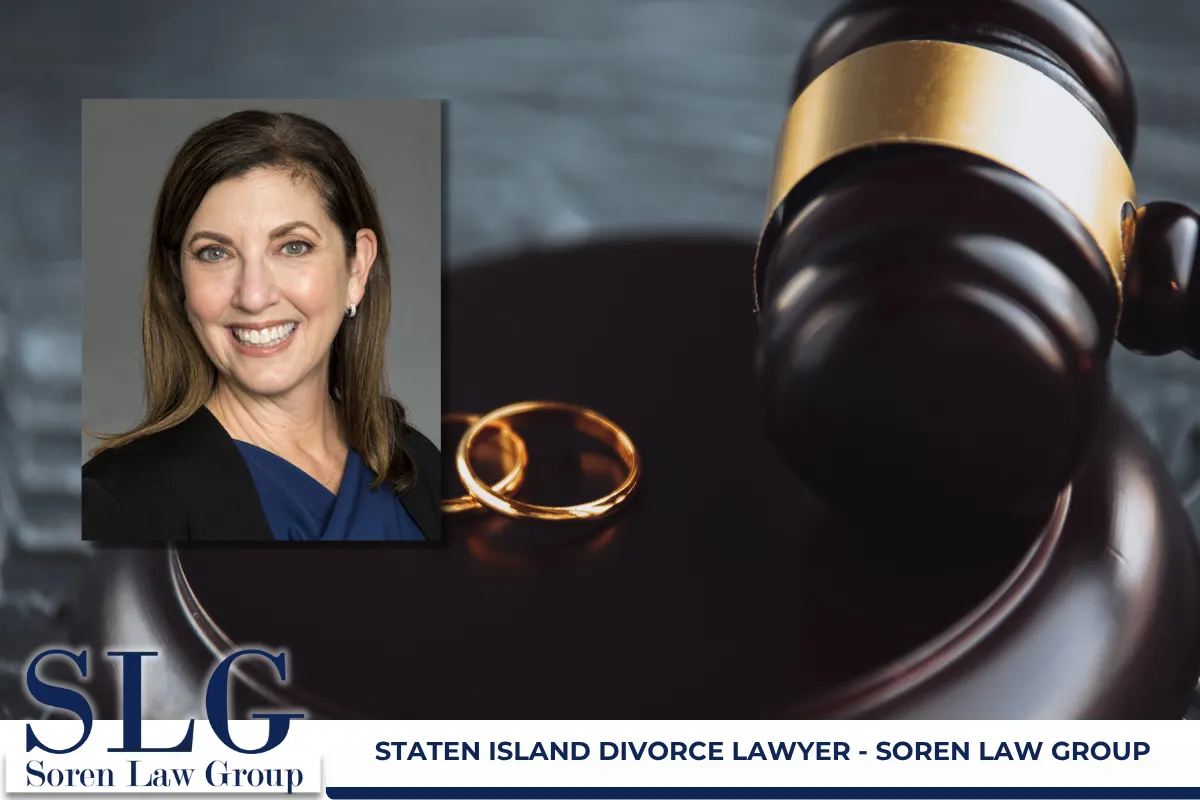
At Soren Law Group, we represent clients throughout Staten Island, New York in divorce cases that involve children born or adopted during marriage. Our team understands that every family’s situation is different, and we tailor our services to meet your specific legal needs, whether the matter involves child custody, child support, or complex adoption-related questions in both Supreme Court and family court.
We are committed to protecting your future and your children’s stability. If you need an attorney who will advocate for you with respect and strategic focus, we encourage you to call us at (718) 815-4500 or fill out our contact form to schedule a confidential initial consultation. Let Soren Law Group serve as your trusted counsel through every stage of the legal process.
Frequently Asked Questions
Can an Adoptive Parent Lose Custody More Easily Than a Biological Parent in New York?
No. Once an adoption is finalized in New York, the adoptive parent holds the same legal standing as a biological parent. Courts evaluate custody under the identical best interests standard, weighing factors like parental fitness, home stability, and the child’s relationship with each parent. There is no legal distinction that would make it easier to remove custody from an adoptive parent simply because the child is not biologically related. If you have been falsely accused of being a less fit parent because of adoption status, a family law attorney can defend your rights and present evidence that supports your role in the child’s life.
What if Only One Spouse Legally Adopted My Child During the Marriage?
When only one spouse completes a step-parent adoption, that spouse gains full parental rights and responsibilities. The non-adopting spouse retains whatever legal standing they already held, such as biological parentage. If the non-adopting spouse has no biological or legal tie to the child, they generally lack standing to seek custody or visitation after divorce. This situation arises frequently in blended families where one parent brought children from a prior relationship into the marriage. Clarifying each party’s legal status early with an attorney helps avoid confusion during separation and ensures the court can properly address custody and support.
How Do Relocation Requests Work With Children Adopted During the Marriage?
Relocation standards in New York apply the same way regardless of whether a child was adopted or born to the marriage. The parent seeking to move must demonstrate that the relocation serves the child’s best interests. Courts consider the reason for the move, the economic and emotional benefits, the impact on the noncustodial parent’s visitation, and whether meaningful contact can be preserved through adjusted schedules and communication. Adoption status does not weaken or strengthen a relocation request. Parents considering a move out of Staten Island should prepare detailed proposals showing how the child’s relationship with both parents will be maintained.
Will Adoption Records or Original Birth Certificates Matter in My Divorce Case?
Once adoption is finalized, the adoption order and amended birth certificate establish legal parentage. Original birth certificates and pre-adoption records are typically sealed and confidential under New York law. These documents do not drive custody outcomes. However, if a child has medical or psychological history documented in adoption records that is relevant to determining appropriate care arrangements, a court may consider that background. In most cases involving uncontested divorces or standard custody proceedings, the amended birth certificate and final adoption decree are the only documents needed to confirm parental rights and obligations.
Do Grandparents of an Adopted Child Have Rights in New York After a Divorce?
Grandparents of adopted children may petition for visitation in New York under certain circumstances. The law does not automatically grant grandparents access, but it allows them to file a request with the court. The grandparent must demonstrate that visitation is in the child’s best interests and that a meaningful prior relationship exists. This applies to both biological and adoptive grandparents. Courts weigh the parents’ wishes against the potential benefit to the child. If a pregnancy or adoption brought the child into the family and grandparents developed a close bond, they may have grounds to seek a free consultation with a family law attorney to explore their options.
Disclaimer
This article provides general information about Staten Island, New York divorce and adoption matters and does not constitute legal advice. Readers should consult a qualified attorney about their specific circumstances before taking any legal action.
Read Staten Island Divorce Lawyer: What Causes Delays in Divorce Cases?